
The Fundamentals of Wine Preservation Science & Climate Engineering
A beautiful wine wall means nothing if the wine inside it is quietly degrading. Many approach a custom wine room purely as a design project, focusing first on the visual impact of the glass and racking. We approach it as an engineering problem. The foundation of any successful cellar is wine preservation science & climate engineering. If the technical environment fails, the aesthetic details do not matter.
-
Why Wine Preservation Science & Climate Engineering is Non-Negotiable
One of wine’s greatest enemies is oxygen entering through the cork. When a room lacks proper humidity control, natural corks dry out, shrink, and allow air to spoil the vintage. Temperature fluctuations accelerate this damage. Choosing the technically correct solution for a wine room is crucial for preserving the quality and value of your wine.
Proper maturation requires a controlled environment that maintains a stable temperature of around 12°C and relative humidity between 55% and 70%. Getting the technical solution right is what actually protects the wine, not the finish on the glass.
-
What Most People Get Wrong About Controlled Environments
The most frequent error is treating a chilled wine room like standard interior architecture. Standard building materials and basic single-pane glass will fail under the continuous humidity load required for proper wine storage.
Another common mistake is relying on generic air conditioning rather than dedicated cellar cooling. Standard air conditioning lowers the temperature but strips moisture from the air, actively harming the collection. Proper climate engineering calculates the exact thermal load of the room and specifies refrigeration that maintains both temperature and humidity without excessive compressor vibration.
-
Technical Glass Systems and Insulation
Standard glass is a poor insulator. To create an architectural feature that performs like a vault, the glazing must be engineered for a specific thermal load. We use proprietary technical glass systems engineered with double energy glazing and argon gas filling.
This prevents condensation from fogging the display during service and ensures the climate system operates quietly and efficiently. The thermal envelope must be continuous. Every element, from the insulated panels to the vibration-dampening flooring, is part of the room’s function.
-
Bespoke Design That Follows Physics
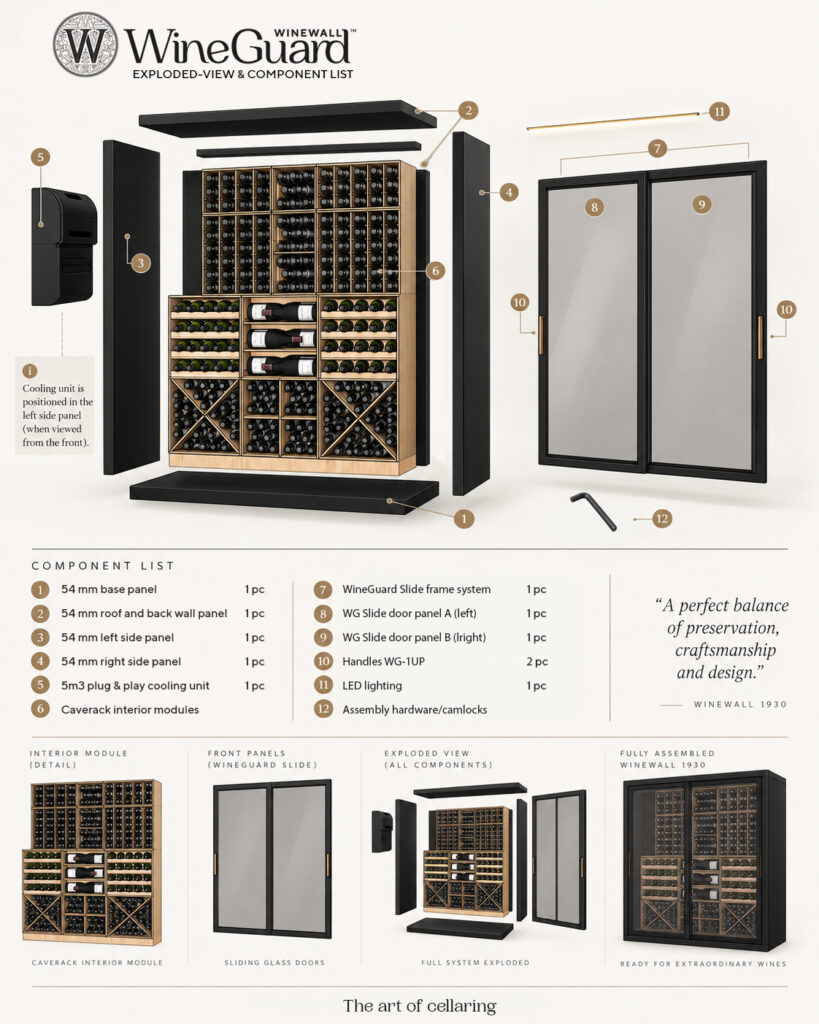
Every WineGuard room is designed from scratch around your actual space, starting with the climate calculation. We prepare drawings so you can see the structural and technical requirements before production, then select the glass, fittings, and finishes together.
Detail work is chosen for function as much as looks. Integrated luxury handles wrapped in hand-sewn Italian leather provide a tactile touch point, while slim aluminium glass profiles ensure structural rigidity under thermal stress.
-
Verify the Engineering in Person
You should not trust high-value collections to standard cabinets or untested custom builds. Come and stand inside three complete, fully operational wine rooms in our showroom before you decide on yours. You can inspect the condensation-free glass, feel the precise climate control, and experience how Norwegian craftsmanship supports correct maturation.
Book a bespoke needs assessment and tailored 3D design drawing to start planning a proper, climate-controlled space for your collection.